


Rhinoplasty, or a nose job, is one of the most popular cosmetic surgeries worldwide. While the results can be life-changing, the recovery process after rhinoplasty requires patience and proper care. Many patients are eager to know how many days recovery after rhinoplasty takes and what they should expect at different stages.
Understanding the Rhinoplasty Healing Process
Rhinoplasty recovery is a critical phase in achieving the final, desired results of your nose surgery. Following precise care instructions, resting adequately, and having realistic expectations about healing time are essential for the best outcome.
While the initial recovery is relatively quick, full healing takes several months as swelling gradually subsides and tissues settle. Most patients resume normal daily activities within 1 to 2 weeks, but subtle refinements in the nose’s shape can continue to develop over the first year.
Stages of Swelling and Bruising After Rhinoplasty
Swelling: Swelling typically peaks around day 3 post-surgery and then slowly diminishes.
Bruising: Bruising usually resolves by the end of the first week.
Tips to Reduce Swelling: Elevate your head while sleeping and apply cold compresses during the first 48 hours to speed recovery and minimize discomfort.
What Is Recovery Like After Rhinoplasty?
The recovery process after rhinoplasty varies from person to person, but generally, patients experience swelling, bruising, and discomfort for the first few weeks. Nasal congestion is common, and breathing may feel restricted due to internal swelling.
Most patients notice significant improvements within the first month, but complete healing can take up to a year. Comparing rhinoplasty 1 month vs 1 year results shows how much the nose continues to refine over time.
Recovery After Nose Job: Timeline and Care
The recovery process begins immediately after surgery and requires careful monitoring for the first 7 to 10 days. Most patients can return to work or school within 7 to 14 days, although physical activities should remain limited during this period.
Key care instructions include:
- Maintaining nasal hygiene with saline sprays.
- Avoiding wearing glasses that rest on the bridge of the nose.
- Refraining from smoking and alcohol consumption.
- Avoiding strenuous exercise, bending forward, sneezing with the mouth closed, and any trauma to the nose during early healing.
• The initial recovery phase is usually complete by the second week, with full aesthetic results becoming visible within 6 to 12 months depending on individual healing and the surgical technique used.
What to Expect During the Rhinoplasty Healing Process
- First Week: Acute swelling, bruising, congestion, minor bleeding, and facial puffiness are common.
- Worst Day: Many patients report day 3 as the toughest due to peak swelling and discomfort.
- Week-by-Week Progress: Swelling decreases, breathing improves, and nasal definition sharpens over time.
• Long-Term: Full healing and refinement can take up to a year.
How Many Days Recovery After Rhinoplasty?
The initial recovery time after a nose job is around 7-10 days, during which most of the swelling and bruising subsides. However, residual swelling can persist for several months, and final results may not be visible until a year later.
Patients should plan for at least one week of rest before returning to work or school. Strenuous activities should be avoided for at least six weeks to prevent complications.
How Long Should You Rest After Rhinoplasty?
Rest is crucial during the first week. It’s recommended to sleep with the head elevated to reduce swelling. Light activities can be resumed after the first week, but it is essential to listen to your body and avoid overexertion.
Full recovery varies, but by the third or fourth week, most patients can return to normal activities with minimal restrictions.
Nose Job Recovery Timeline Overview
- Early Recovery (Days 1–7): Initial swelling, bruising, and discomfort are most pronounced.
Intermediate Phase (Weeks 2–4): Noticeable reduction in swelling and bruising, improved comfort.
- Late Recovery (Months 1–3): Continued tissue healing and definition of nasal contours.
Long-Term Healing (Months 3–12): Final refinements appear as swelling fully resolves and tissues stabilize.
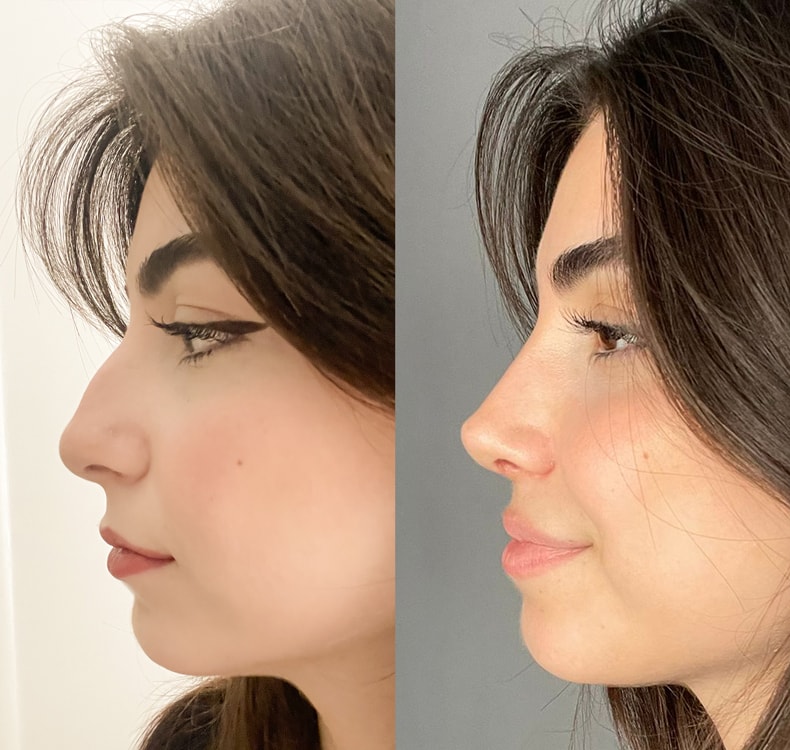
Rhinoplasty recovery photos showing day-by-day and week-by-week progress can be reassuring and help set realistic expectations.
Can You Walk After Rhinoplasty?
Yes, light walking is encouraged after surgery as it promotes circulation and reduces the risk of blood clots. However, avoid bending over, lifting heavy objects, or engaging in intense exercise for at least four weeks.
Rhinoplasty Recovery Day by Day
Understanding the rhinoplasty recovery day by day process helps set realistic expectations:
- Day 1-3: Swelling, bruising, and discomfort peak.
- Day 4-6: Swelling starts to decrease; breathing improves.
- Day 7: Stitches and splint are removed.
- Day 10: Most bruising disappears.
- Day 14: Swelling is significantly reduced.
Rhinoplasty Recovery Week by Week
- Week 1: Major swelling and bruising.
- Week 2: Noticeable improvement; patients feel more comfortable in public.
- Week 3-4: Breathing improves, and swelling continues to decrease.
- Week 6: Most restrictions are lifted.
What to Expect 3 Weeks After Rhinoplasty?
By week three, patients notice substantial improvements. Swelling is still present but less prominent. Breathing is easier, and most daily activities can be resumed. However, the nose still needs time to heal fully.
Rhinoplasty 1 Month vs 1 Year: Changes Over Time
At one month, the nose appears refined, but swelling is still noticeable. By one year, all residual swelling subsides, and the final shape is fully developed. Comparing rhinoplasty 1 month vs 1 year photos highlights this transformation.
Recovery Time After a Nose Job: Factors That Affect Healing
Several factors influence recovery time after a nose job, including:
- Individual healing ability
- Type of rhinoplasty (open vs. closed)
- Post-operative care
- Lifestyle choices (smoking, diet, hydration)
Check out the blog “How to Clean Your Nose After Rhinoplasty?” for nose care after rhinoplasty!
Rhinoplasty Recovery Photos Day by Day: Visual Healing Progress
Many patients document their healing journey with rhinoplasty recovery photos day by day to track progress. These photos help manage expectations and reassure others undergoing the procedure.
Worst Day of Rhinoplasty Recovery: What to Expect and How to Handle It
The worst day of rhinoplasty recovery is usually between days 2-4 when swelling and bruising peak. Keeping the head elevated, applying cold compresses, and taking prescribed pain medications can help manage discomfort.
What Not to Do After Rhinoplasty: Common Mistakes to Avoid
- Avoid strenuous activities.
- Do not blow your nose.
- Stay away from smoking and alcohol.
- Avoid sleeping on your stomach or side.
Tips for a Smooth and Fast Rhinoplasty Recovery
- Stay hydrated and eat a healthy diet.
- Sleep with your head elevated.
- Follow your surgeon’s post-op instructions.
- Avoid direct sun exposure.
Additional Recovery Tips
Prioritize sleep, hydration, and gentle movements during the first 7 to 10 days.
Protect your nose from sun exposure, heat, and trauma for several weeks.
Follow up regularly with your surgeon to monitor healing and address any concerns.
Emotional adjustment is part of the healing process, as you adapt to your new appearance.
Post-Rhinoplasty Care at Dr. Harun Acipayam’s Clinic
Patients at Dr. Harun Acipayam’s clinic receive personalized post-operative care, including:
- Detailed instructions on nasal hygiene and activity restrictions.
- Supportive follow-up appointments.
- Guidance tailored to individual healing progress.
This comprehensive approach helps patients navigate their recovery with confidence and achieve optimal long-term results.